
















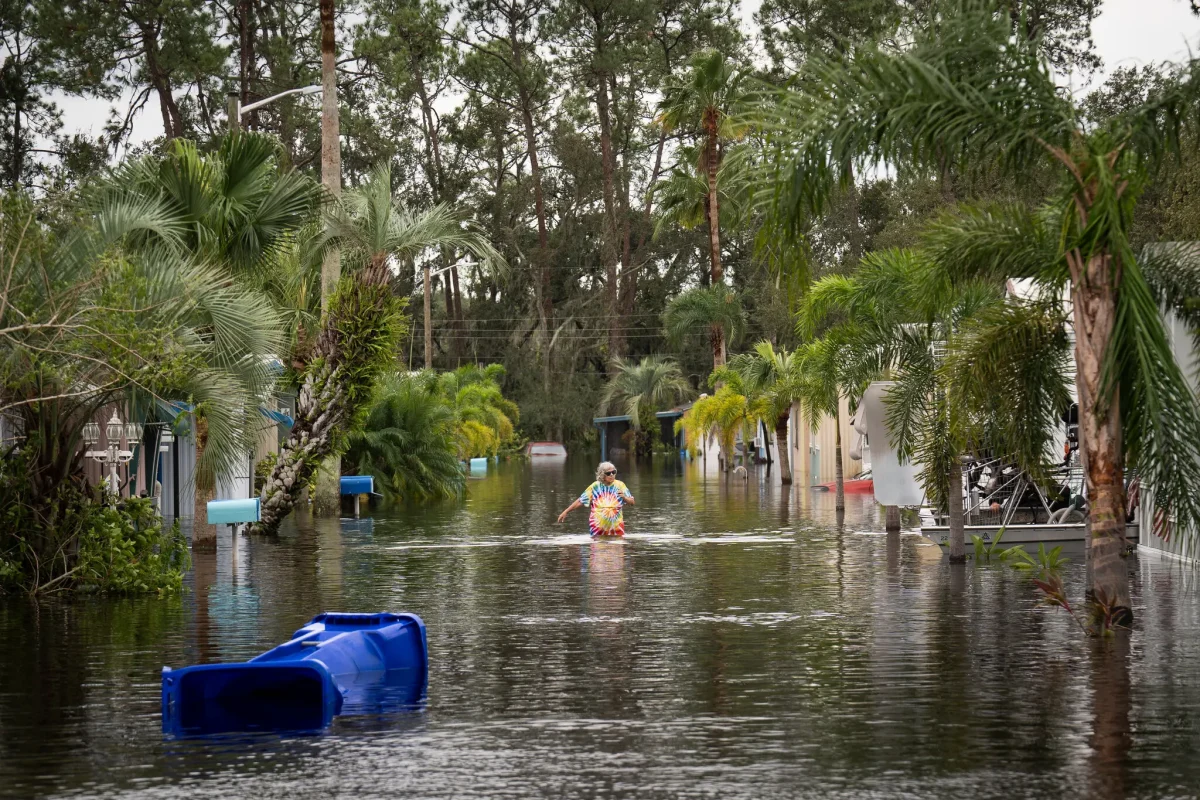
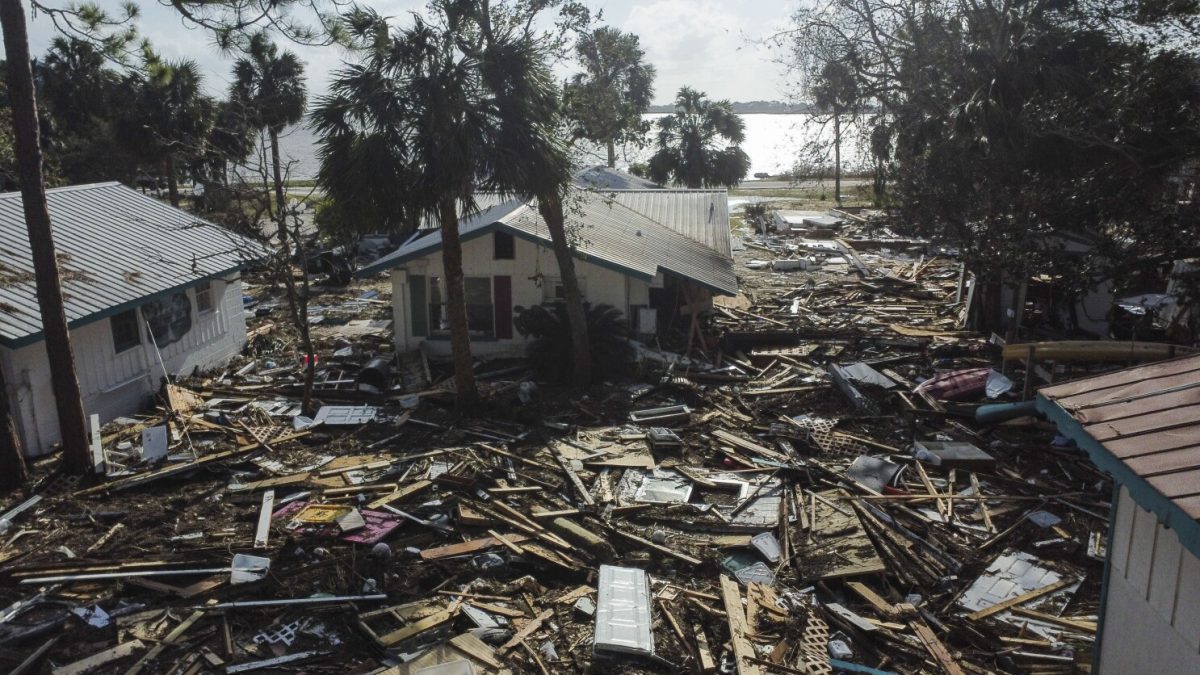

Coastal cities, already prone to devastating storms, are experiencing land loss at increasingly alarming rates due to climate change. New Orleans, already below sea level, is one of these cities.
“This is one of those cities that will have an end date,” said Torbjörn Törnqvist, Ph.D., coastal geoscientist and Vokes Geology Professor at Tulane University School of Science and Engineering.
Climate change impacts
Historically, one inch of land is lost off the Louisiana coast every three years, but recently, it has been losing around 25 square miles of land per year, according to the Environmental Protection Agency.
Louisiana’s coast faces erosion naturally because of the way the land was developed, according to the EPA. The land that New Orleans sits upon was created from gradually compacted sediments from the Mississippi River. Human development prevents the natural deposition of sediments, meaning the land continues to erode without being replenished.
With the rising sea levels, current efforts to combat flooding while experiencing land loss will become more difficult.
Our climate is changing at an alarming rate. The climate reached its first point of no return after corals around the world had been pushed past their limit by the rising heat, stated scientists in the Global Tipping Points Report 2025.
This loss is a pressing ecological damage, said researchers in the report published Oct. 13. The corals are invaluable in supporting ocean environments, providing for 25% of ocean fish, according to the EPA.
This tipping point represents the planet moving towards harsher climate conditions with increased temperatures, more volatile storms and rising sea levels. With more tipping points to be passed as the climate shifts, the conditions are exponentially accelerating, according to ScienceNews Magazine.
These points include the Amazon rainforest dying, the melting of the Greenland and West Antarctic ice sheets and the collapse of a powerful ocean current system known as the Atlantic Meridional Overturning Circulation (AMOC), according to ScienceNews Magazine.
While these points may be far from the United States, their impacts are felt everywhere.
New Orleans is protected by levees, flood walls and pumping systems to remove water from the bowl-shaped city. This system keeps water from flooding the city, but with the forthcoming climate changes that will bring more rain, New Orleans is at risk of sinking if rising sea levels outmatch the capacity of the flood protection system.
“It’s very likely that we are already locked in for global sea level to rise by somewhere between 10 and 20 feet [in the next several centuries],” said Törnqvist. “If we don’t take more serious action on climate change, we are putting Baton Rouge at risk… And as it stands right now, that’s going to be our future shoreline.”
We can still take action to make sure that future sea levels will rise 10 to 20 feet, but not 50 feet, he added.
Solutions & responses
The state, along with other organizations like the Mississippi Delta Restoration Project, has introduced solutions.
In 2007, the state created the first-ever Coastal Master Plan to restore the coast over 50 years. Restoring marshes, which naturally provide flood protection, could support the flood protection system of New Orleans. Landscaping and replanting to support the habitat will enhance the resilience of the area, reported the National Audubon Society.
Restoring areas such as the Golden Triangle Marsh, Bayou Bienvenue Wetland Triangle and the Barataria Basin by depositing sediment in strategic locations to build land and restore the habitat will create natural barriers in areas at more risk of flooding.
These projects face strong opposition from current lawmakers.
“It seems impossible to convince the people who really can make a difference, especially here in Louisiana, because we’re going to suffer more than most other states,” said Törnqvist. “There are entire parishes that are going to be gone by the end of the century. People still live there.”
Gov. Landry cancelled the Mid-Barataria Sediment Diversion, a cornerstone of Louisiana’s Coastal Master Plan, in July of this year due to his concerns about the cost and the impact on local shrimp and oyster fisheries, according to Fortune Magazine.
In addition to defunding, he overhauled the agency that maintains New Orleans’ hurricane protection levees and pumps. The bill, HB633, reduced the size of the South Louisiana Flood Protection Authority-East’s board from nine members to seven, and granted the governor far more power over the agency, reported NOLA.com.
Federal grant cuts have also impacted the Mississippi Delta Restoration Project. Similar reductions will inhibit the U.S. Army Corps of Engineers from conducting regular inspections of New Orleans’ levees this year and next, NOLA.com reported.
New Orleans underwater
Although policymakers are choosing to ignore it, the Louisiana coast will change in the future. For coastal cities, this means conditions will become increasingly unlivable until retreat is inevitable, said Törnqvist.
New Orleanians will eventually be forced out of their city because flooding will make many areas of the city dangerous and uninsurable. The only people who will be able to live here at some point will be the very wealthy and the people who can’t afford to leave, said Törnqvist.
Already, New Orleans has lost about 20,000 people over the past five years, according to 2024 U.S. census data.
Törnqvist hopes that retreating inland might be a chance for the city to rebuild in a safer, more sustainable way that could also improve people’s quality of life, he said.